
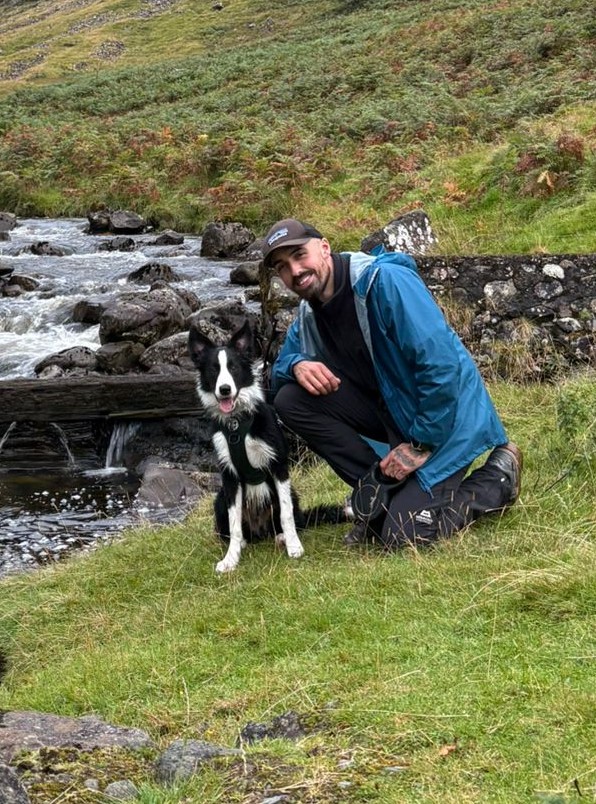
Meet Jack Fox
All About Jack
If Richard builds the engine and Sarah keeps the car on the road, I’m the one who makes sure you actually want to sit in the driver’s seat.
Officially, I’m the Creative Developer at Richah. Practically speaking, that means I take Richard’s bulletproof, twenty-five-years-in-the-making backend code and Sarah’s stubborn insistence that it actually solves a real problem, and I figure out how a human being is actually supposed to interact with it. If a piece of software works brilliantly but feels like doing your taxes in 1998, people won't use it. My job is the interface, the styling, the user journey, and the general "vibe"—ensuring that when you click a button on one of our apps, it doesn't just execute a function; it feels right.
How I got here (via the scenic route)
I am relatively new to the software industry, which I view as a distinct advantage: I haven’t been staring at terminal windows long enough to forget how normal people think.
My background looks less like a traditional tech CV and more like a checklist of high-energy jobs that keep you on your feet. I’ve worked as a photographer, spent time on small film sets, managed a busy cocktail bar and restaurant, and worked as an outdoor instructor. If you look closely at that list, though, it is all the exact same job: reading a room, understanding what a person needs before they ask for it, and making an experience feel seamless.
My gateway into coding happened alongside Sarah at The Card Project. I started out helping with the visual design side of the ID cards, and realised pretty quickly that designing a physical layout wasn't a million miles away from designing a digital one. That curiosity led me to start building TrailTrack—a personal project born out of wanting to combine software, design, and the outdoors. The moment I saw a static design of mine actually come to life as a working, breathing web application, that was it. I was hooked.
The Richah dynamic
Working with Richard is an absolute masterclass. He has forgotten more about software architecture than most people will ever learn, which gives me an incredible creative safety net; I can push the boundaries of what an interface looks like, knowing Richard will figure out how to make the database survive it. Conversely, working with Sarah means that the moment my "creative process" threatens to spend four days animating a drop-down menu, a gentle, highly effective anchor pulls me back to reality.
Out on the fells (and dragging Richard with me)
When I’m not at a keyboard, I am outside. Usually moving fast, and usually being paced by Zuko—a high-octane Border Collie who views sitting still as a personal failure.
I love the Lake District with the kind of zealotry that usually requires an intervention—hiking, camping, and above all, fell running. Recently, I decided that Richard, who has happily road-run on flat, sensible tarmac for years, needed to experience the character-building joy of vertical Cumbrian mud. He claims I tricked him into it; I maintain I broadened his horizons. (He complains about it bitterly in his bio, but I notice he keeps turning up for the next run).
That outdoor mindset spills directly into how I build software. When you spend half your life navigating unpredictable weather on a mountainside, you develop a very low tolerance for clutter, confusion, and unnecessary friction. I try to design interfaces the same way: clean, fast, reliable, and getting you to the view with as little fuss as possible.
So, when you open one of our tools and the layout makes immediate sense, the typography feels sharp, and you don’t have to read a manual just to find the dashboard—that’s my corner of the codebase. And if you ever see Richard sprinting up a 25% gradient looking furiously at his Garmin, please give him a wave. He's doing great.