
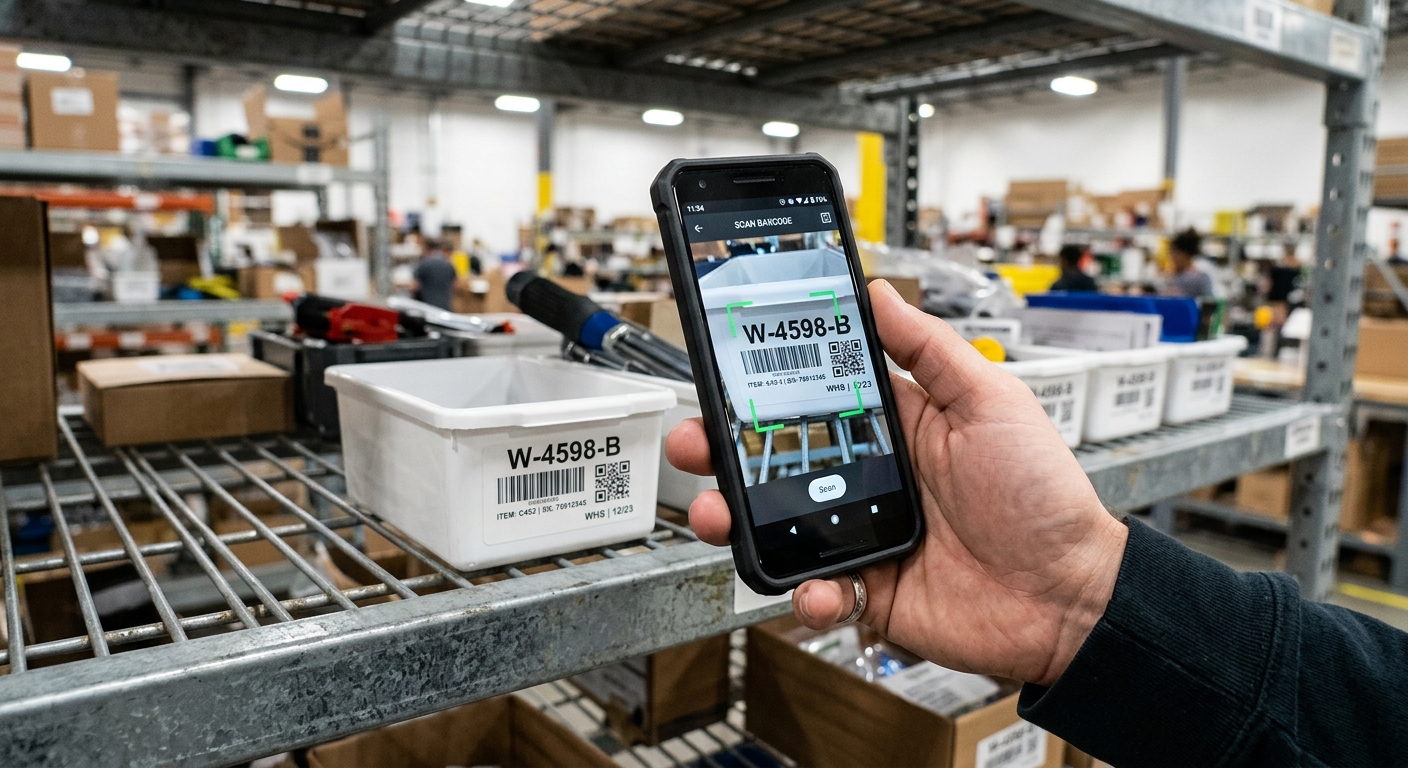
Inventory and Stock Trackers
Most businesses that deal with physical products start out the same way. You have a shelf in the back, a few boxes in a van, or a small warehouse. You know where everything is because it’s all in your head. But as you grow, that mental map starts to fade. Suddenly, you’re looking for a specific part that you know you bought last week, but it’s nowhere to be found.
You end up buying a replacement just to get the job done, only to find the original part three days later hiding under a pile of bubble wrap.
This is the "inventory trap." It’s a mix of wasted money, lost time, and the constant low-level stress of not actually knowing what you own. This is why we build custom stock trackers. We create a digital version of your physical space that remembers exactly what you have, where it is, and when you need to get more, so you can stop guessing and start growing.
Why generic stock apps often feel like a chore
If you’ve ever tried to use a "ready-made" inventory app, you probably found it pretty frustrating. Most of them are built for massive corporations with huge teams and barcode scanners on every corner. They come with a hundred features you don’t need and a setup process that feels like learning a new language.
The problem is that these apps expect your warehouse or shop to look a certain way. They want you to change how you store your goods just so the software can understand it. But we don't think you should have to rearrange your life to fit an app.
When we build a tracker for you, we start by looking at how you actually move things around. Whether you’re tracking heavy machinery parts, delicate craft supplies, or van stock for a team of plumbers, the system should follow your lead. We build it to match your physical bins, shelves, and locations. It doesn’t feel like "data entry"; it feels like a natural part of your workday.
Creating your own labels and barcodes
One of the biggest hurdles to starting a digital system is that half your stuff probably doesn't have a barcode on it. You might have bags of loose washers, custom-made components, or raw materials that arrived without a label. Generic apps usually assume everything is already perfectly tagged by the manufacturer.
We solve this by building a "Print Label" button directly into your dashboard. When you add a new item, the system can generate a unique QR code for it instantly. You can print this onto a small thermal sticker, slap it onto the bin or the box, and suddenly your "anonymous piles of parts" are trackable. It makes the initial setup much faster and ensures that everything in your building has a digital identity.
Knowing exactly what you have in real-time
The biggest win with a custom tracker is the end of the "stock take" nightmare. Most people hate stock takes because they involve a clipboard, a pen, and four hours of counting things in the cold.
A professional system handles the counting as you go. Every time a part is used or a product is sold, the system updates immediately. If a member of your team takes a pack of copper pipes from the van, they just tap a button on their phone, and the system knows it’s gone. Because we build this specifically for you, we can make it as simple as possible. Your team can just scan that QR code with their phone camera to "check out" an item. There’s no typing, no searching through long lists, and no room for human error.
Handling returns and damaged goods
In the real world, stock doesn't just go out; it often comes back. A customer might return a part, or a technician might find a faulty valve in a box that can't be used. Generic trackers are usually "all or nothing"—it's either in stock or it isn't.
When we build your system, we include a "Quarantine" or "Return" status. Instead of just adding a returned item back into your active stock—where someone else might accidentally try to use it on a job—the system flags it. This keeps your live inventory numbers honest and ensures your team only grabs parts that are actually fit for the job.
Tracking specific batches and serial numbers
Knowing you have ten drills in the cupboard is good, but sometimes you need to know exactly which drill is where. This is vital if a manufacturer issues a recall on a specific batch of parts, or if a customer claims a warranty on a specific tool.
We can build in Serial Number or Batch tracking to handle this. When you scan an item, the system logs its entire history—where it came from, who handled it, and exactly when it left your possession. It’s like a "birth certificate" for your high-value items or parts with expiry dates. It gives you total traceability so you aren't left scratching your head if a problem crops up months later.
Letting the system handle the reordering
One of the most stressful parts of managing stock is the fear of running out. If you’re halfway through a job and realize you’re missing a vital component, the whole project grinds to a halt. When we build your tracker, we give it a "memory" for your limits. You tell us the minimum amount you ever want to have for any item, and the moment you hit that limit, the system sends you an alert.
We also make the system "smart" about how long things take to arrive. If a supplier takes three weeks to deliver but you’re using five units a week, just setting a "minimum of 10" isn't enough—you'll run out before the new box arrives. We can build the system to understand these lead times. It calculates the "Safety Stock" for you based on how fast you’re using the items, so you aren't just reacting to low numbers—you’re staying ahead of them.
Tracking items across different locations
If your business has stock in more than one place—maybe a main warehouse, a shop floor, and three different vans—keeping track of it all is almost impossible without a dedicated system. We make sure your tracker treats every location as its own "bin." You can see exactly what is in Van A vs. Van B.
We also solve the "Van Problem." Vans and warehouses often have terrible phone signal, and if an app needs 4G to work, your team will stop using it because it’s too slow. We build the system with "Sync Later" logic. Your team can scan a part and check it out even with zero bars of signal. The app stores that data on their phone and automatically updates your master list the moment they get back into an area with a signal.
Managing your tools as well as your stock
Many businesses track the products they sell but forget the expensive tools they use to do the work. You might have 500 screws in stock (which get used up), but you also have five specialized drills (which don't).
We can create a separate category for "Assets." These aren't consumed; they are "checked out" to a person and "checked back in" when they are finished. This allows you to see exactly who is currently using the expensive gear. We can even set up a maintenance schedule within the tracker, so the system reminds you when a specific tool needs a service or a safety check.
Tracking parts vs. whole units
Every business is different. Some people sell finished products, like a bike. Others manage "components"—the thousands of nuts and bolts that make up a larger service. Off-the-shelf software is usually good at one or the other, but rarely both.
If you build custom furniture, you need to track the wood, the screws, and the fabric, but you also need to track the finished sofa. We build your system to handle this "recipe" logic. When you mark a sofa as finished, the system automatically "eats" the right amount of wood and fabric from your raw materials list. It does the math for you so you don't have to manually figure out how many screws you have left.
You still keep total control
Even with all this automation, we know you still need to be the boss. There will always be times when you need to manually override the system—maybe a supplier sent you two extra boxes as a gift, or an item got damaged.
We give you an Admin Dashboard that acts as your "Master Switch." From here, you can see a bird's-eye view of everything. You can add new product lines in seconds, manually adjust stock levels, and see exactly who moved what and when. It gives you total visibility without forcing you to do the "grunt work" of daily tracking. You keep the control, but lose the headache.
Protecting your money and your gear
Stock is essentially cash sitting on a shelf. If it goes missing, gets damaged, or just sits there for three years gathering dust, you are losing money. A custom-built tracker helps protect that investment by adding accountability. Because every "movement" of stock is logged to a specific user, things tend to stop "walking out the door."
Second, the system helps you see what is actually selling. We build reporting that shows you your "dead stock"—the items that haven't moved in months. This lets you make better decisions about what to buy in the future. Instead of tying your money up in stuff that doesn't sell, you can put it into the products that actually move.
How our custom trackers compare
To give you an idea of why a custom build is usually the right move for a growing business, here is how it stacks up against a standard app:
| Feature | Generic Stock Apps | Our Custom Built Trackers |
|---|---|---|
| Workflow | You have to organize your warehouse to fit the app. | The app is built to match your physical layout. |
| Labeling | Assumes everything has a manufacturer's barcode. | Built-in label printing for your own QR codes. |
| Offline Sync | Often fails or hangs when signal is low. | "Sync Later" logic works perfectly in basements or vans. |
| Reordering | Basic "low stock" alerts. | Smart lead-time logic stays ahead of supplier delays. |
| Returns | Hard to track damaged or "quarantined" items. | Separate categories for faulty or returned stock. |
How we work with you to build it
The reason people come to us for an inventory system is that they’re tired of the "paper and pen" struggle but they aren't tech experts. They want a solution that works, not a new hobby.
When we start a project, we don't just ask about your products. We ask how your warehouse is laid out and how your team actually picks their orders. We take those real-world answers and we build a tool that solves them. We handle all the technical setup, the barcode logic, and the database work. All you have to do is log in and see exactly where your money is sitting.
A stock tracker isn't just about counting boxes; it’s about peace of mind. It’s about knowing that when a customer calls, you can say "yes, we have that" with 100% confidence. If you can describe how your stock currently moves—and what’s going wrong with it—then we can build the system that finally keeps it all in check.
Of course, we can build more, so much more than just inventory systems! For other concept to code ideas then why not check these out. Pricing can be found at the top of the page (but be aware, the prices are just guidelines, we can only quote you properly when we speak so click that button above and lets chat!)
To show we're not all talk, you can see examples of what we've built in our RiCollection - this is an ever growing portfolio of apps that we built because we needed them. All of them can be customised to fit exactly what you need to!
What do I do if most of my stock doesn't have barcodes?
A custom system can generate unique QR codes for any item and let you print labels directly from your dashboard. You just add the item, print a thermal sticker, and stick it on the bin or box—suddenly everything becomes trackable, even loose parts or custom-made components.
How do I handle stock that comes back damaged or faulty?
A custom system can include a 'Quarantine' or 'Return' status for items that aren't fit for use. This keeps faulty stock separate from your active inventory, so your team only grabs parts that are actually ready for the job.
Can I track both the products I sell and the tools my team uses?
Yes. A custom tracker can manage consumable stock (like screws or parts) and reusable assets (like drills or specialized tools) separately. Tools can be checked out to specific people and checked back in, and you can even set up maintenance reminders.