
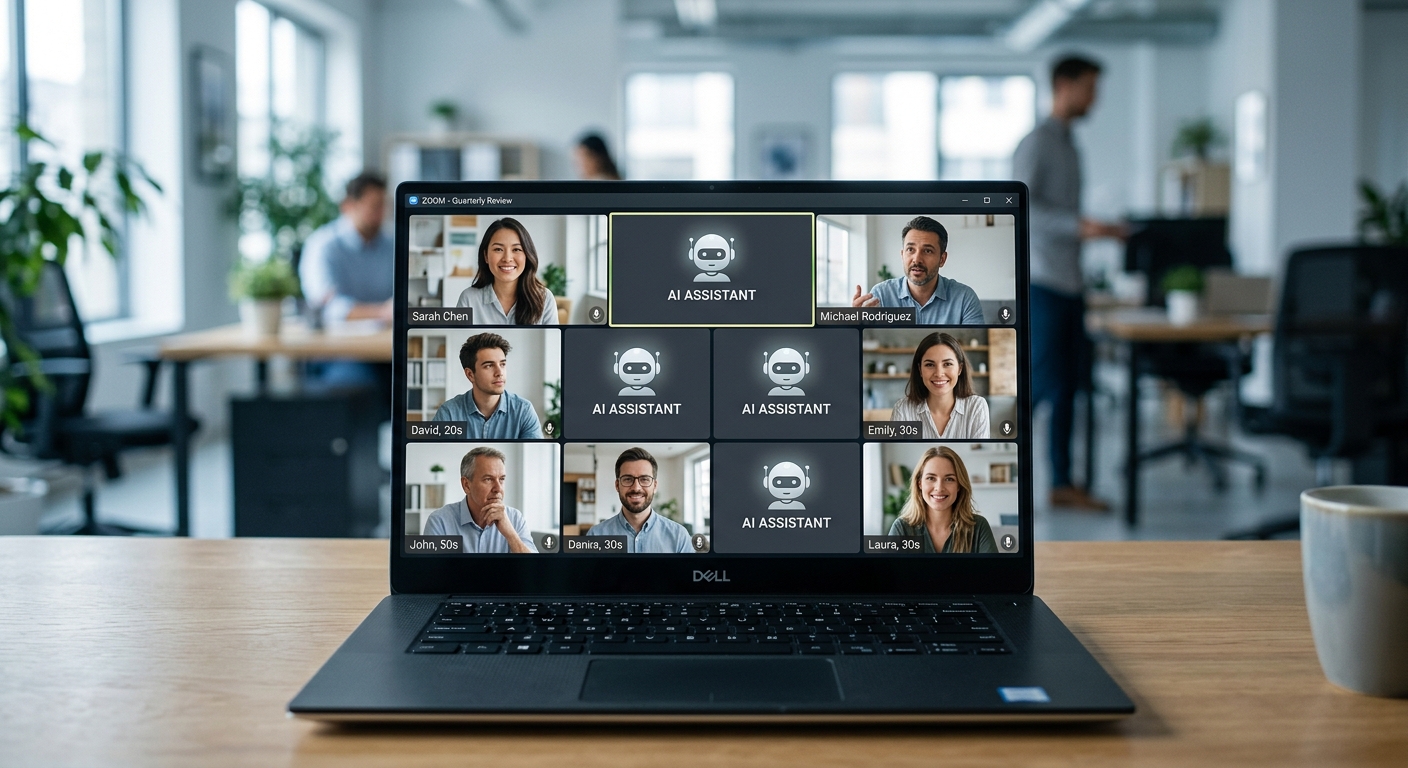
There Are Four AI Bots in This Meeting and Nobody Invited Any of Them
The Monday morning catch-up has acquired some extra attendees. There's the transcription bot quietly recording every word, the summary bot taking notes in its own peculiar style, the CRM bot updating customer records based on what it thinks it heard, and the task-management bot already assigning follow-up actions to people who haven't agreed to anything yet. Nobody sent them a calendar invitation. They simply appeared, each riding along with whichever team member installed the relevant tool, and now they're all interpreting the same conversation in slightly different ways.
This is not a distant scenario. It's entirely plausible given how many workplace tools now offer meeting assistance as a feature. What makes it interesting is not that the technology exists, but that nobody has quite worked out who's in charge when several automated assistants turn up to the same event.
When the Meeting Has More Bots Than Biscuits
Each bot typically serves a specific purpose. One transcribes speech to text with varying degrees of accuracy depending on accents, background noise and whether someone is eating crisps. Another takes that transcript and produces a summary, condensing an hour of discussion into bullet points that may or may not reflect what anyone actually meant. A third watches for customer names or project references and updates a CRM system accordingly. The fourth listens for anything that sounds like a commitment and generates tasks, often with optimistic deadlines.
On their own, these tools can be genuinely useful. Transcription means you can search for what was said about the budget in that meeting three weeks ago. Summaries help people who couldn't attend. CRM updates save someone the tedious job of copying information across systems. Task extraction means action points don't vanish into the void.
The trouble starts when they all attend simultaneously, each operated by a different person or department, each with its own ideas about what matters.
Which Version Is the Official Truth?
When four bots process the same meeting, you get four interpretations. The transcription bot captures what was said, including the bits where everyone spoke at once and the technical terms it rendered as complete nonsense. The summary bot decides which points were important based on algorithms that may prioritise differently to humans. The CRM bot pulls out customer details, potentially mishearing a name or associating a comment with the wrong account. The task bot creates to-do items that may not match what anyone actually volunteered to do.
If these versions disagree—and they will—which one becomes the official record? Does the transcription win because it's closest to the original audio? Does the summary prevail because someone's manager only reads those? Does the CRM entry become fact because it's already in the database? The task bot has probably already sent reminder emails, so its version might be the one people act on regardless of accuracy.
Without a clear decision about which record matters, you end up with contradictory documentation scattered across systems, and nobody quite sure what was agreed.
The Consent Question Nobody Asked
Meeting recordings, transcripts and the names of participants are often personal data. Under UK data-protection rules, there need to be appropriate safeguards: a lawful basis for processing, transparency about what's happening, security for the data, limits on how long it's kept and controls over who can access it.
Consent is one possible lawful basis, but it's not the only one—legitimate interests or contractual necessity might apply depending on the context. The important bit is that people generally need to know their contributions are being recorded and processed, and by what. When one person's transcription bot joins a meeting, that might be explained. When four different tools are running simultaneously because four different people installed them, the transparency rather falls apart.
Some attendees may not realise they're being recorded at all. Others might know about one bot but not the other three. The person who consented to their own tool transcribing the meeting may not have consented to someone else's CRM bot filing their comments in a database they don't control. Employment context matters too, but even internal meetings benefit from people knowing what's being captured and where it's going.
Practical Governance Before It Gets Silly
Addressing this doesn't require banning automation entirely—that ship has sailed and taken the oars with it. It does require some straightforward governance.
First, someone needs to tell meeting attendees which bots are present. A notice at the start of the call covers this reasonably well, assuming people read notices, which is admittedly optimistic but better than nothing.
Second, organisations might consider designating one official meeting record rather than allowing parallel bot ecosystems. If the transcription tool is the source of truth, the summary and tasks can derive from that rather than creating independent versions that may contradict each other.
Third, each automated record benefits from having a human owner responsible for checking it makes sense and correcting obvious errors before anyone relies on it. Bots are helpful, but they're not infallible, and the CRM update that files your biggest client under "Acme Crisps Limited" because someone was snacking during the call does need human intervention.
Fourth, access controls matter. Not everyone needs access to full transcripts of every meeting, and bots shouldn't be storing recordings indefinitely just because nobody told them to stop.
Finally, preventing duplicate automated actions saves confusion. If two different task bots both assign the same action to the same person with different deadlines, that's not efficiency—it's just annoying.
The Meeting After the Meeting
The oddest part of multiple meeting bots may be how they change behaviour. People start speaking more carefully when they know they're being transcribed, which can be useful but also stilted. Discussions become performative when everyone's aware the summary might be read by senior management. The spontaneous brainstorming that produces good ideas gets self-censored because nobody wants the preliminary bad ideas recorded for posterity.
Whether that's an improvement or a loss depends on your perspective and the meeting in question. But it's worth noticing that inviting four automated assistants to every discussion does change the dynamic, even when they're sitting quietly in the digital corner processing everything.
More on AI and Automation
If this examination of automated meeting assistants was useful, we've written rather a lot about AI and automation—how it works in practice, what the complications are, and what actually helps rather than simply adding digital clutter. There are plenty more articles to browse if these questions interest you.
What AI training data actually includes (and why it definitely read your blog in 2019)
What happens when you ask an AI to forget what you just told it (and why it can't)
Why your AI chatbot keeps apologising (and what that reveals about how it was trained)
Why We Write About This
We cover these topics because they're part of our daily work. AI tools and techniques shape how modern web applications and software are built, and we use them in the things we create. Understanding what automated systems actually do—and where the practical complications lie—matters when you're building tools that people will rely on.
Working Together
If you'd like us to build you a website, develop custom software, or help solve a technical problem with the kind of practical thinking that doesn't mistake automation for magic, we'd be glad to hear from you. Get in touch and we can discuss what would actually be useful for your situation.
Do I need to tell people if I'm using an AI bot to record our meeting?
Yes, you should. Under UK data-protection rules, people generally need to know their contributions are being recorded and processed. A simple notice at the start of the call covers this, though it's even more important when multiple people are running different bots in the same meeting.
Which meeting bot record should I trust if they all say different things?
It depends on what your organisation designates as the official source of truth. The transcription is usually closest to what was said, but summaries might be what managers read, and CRM entries become facts once they're in the database. You need to decide which one matters most before conflicts happen.
Do people behave differently when they know bots are recording the meeting?
Yes, they do. People speak more carefully and discussions become more performative when they know everything's being recorded and summarised for senior management. This can reduce spontaneous brainstorming because nobody wants their preliminary bad ideas documented forever.