
The Energy Bill Your AI Infrastructure Actually Runs Up (and Why Someone Needs to Start Caring)
There's a moment in every AI deployment where someone in finance squints at a cloud bill and asks whether the numbers have acquired an extra zero by mistake.
They haven't.
What's happened is that the neat little proof of concept that impressed everyone in the boardroom has quietly transformed into something that runs continuously, coordinates multiple agents, checks provenance on every decision, logs everything for compliance, and generally behaves like a small data centre that never sleeps.
The energy costs of artificial intelligence have become one of those topics everyone acknowledges in principle whilst largely ignoring in practice. Training a large language model gets the headlines, but most organisations aren't training foundation models from scratch. What they are doing is running inference constantly, orchestrating systems that involve dozens of API calls per transaction, maintaining vector databases that need to stay warm, and keeping governance frameworks ticking over in the background. All of which requires electricity, and quite a lot of it.
Where the Watts Actually Go
The obvious culprit is GPU time. Those tensor cores that make modern AI possible are magnificent pieces of engineering, but they're not exactly frugal. A single high-end GPU can pull several hundred watts under load, and most production AI systems aren't running on a single GPU.
What catches people off guard is everything else. The model itself might be reasonably efficient, but then you add the supporting cast. Vector databases that need to perform similarity searches across millions of embeddings. Coordination layers that manage multiple AI agents working in concert. Provenance tracking that logs every decision and data source for audit purposes. Orchestration systems that route requests, handle failover, and manage state across distributed components.
Each piece makes perfect sense in isolation. Of course you need robust logging. Obviously you want multiple agents to collaborate on complex tasks. Naturally you need to track where your data came from for compliance reasons. But stack them all together and you've built something that draws power continuously, not just when someone asks it a question.
The Edge Computing Complication
Moving processing to edge devices was supposed to help with this. Run the model closer to where the data lives, reduce latency, cut down on data transfer costs. The snag is that edge devices still need power, and they often need it in places where electricity isn't particularly cheap or abundant.
A warehouse full of edge AI devices doing real-time quality control might be more responsive than sending everything to the cloud, but it's also a warehouse full of computers that run all day. They need cooling, even modest amounts. They need redundancy, because you can't have your production line stop when a device fails. The total power budget creeps upward in ways that weren't obvious when you were just testing one device on a desk.
The Agentic AI Power Multiplier
Agentic AI systems—where multiple AI agents work together, each with different specialisations—have become fashionable lately, and for decent reasons. They can handle complex tasks that single models struggle with. But they're also power-hungry in ways that aren't immediately apparent from the architecture diagrams.
Each agent needs to run its own inference. They need to communicate with each other, which means serialising and deserialising messages, maintaining state, handling conflicts when agents disagree. There's usually a coordination layer managing the whole dance, which is itself doing constant work even when the agents are idle. And because these systems are meant to be autonomous, they're often running continuously, looking for work, monitoring for triggers, staying ready to act.
The really expensive bit is when agents need to backtrack or iterate. An agent makes a decision, another agent spots a problem, they need to reconsider, which means running more inference, checking more data, coordinating again. This is computationally useful—you get better outcomes—but it's also computationally expensive. Every loop through that process is more GPU time, more memory access, more electricity.
Governance and Provenance Don't Come Free
Then there's the governance infrastructure that hardly anyone budgets for properly. Modern AI deployments need to track provenance: where did this data come from, which model version made this decision, what were the inputs, can we reproduce this result. All perfectly reasonable requirements, particularly in regulated industries, but they add overhead to every single operation.
A governance framework might check each input against policy rules, log the decision process, verify that data handling meets compliance requirements, and store enough metadata to satisfy an audit three years hence. That's a lot of database writes, policy evaluations, and validation checks happening behind the scenes. Each one is small, but when you're processing thousands or millions of transactions, those small costs accumulate into something that shows up on the power bill.
Real-time monitoring and observability tools compound this further. You want to know when your AI system is behaving oddly, so you instrument everything. Metrics collection, log aggregation, anomaly detection running over your metrics, dashboards that update continuously. All useful, all consuming resources, all running constantly whether anyone's looking at the dashboard or not.
When the Business Case Meets Reality
The disconnect often happens between the pilot project and full deployment. The proof of concept ran a few hundred queries and cost virtually nothing. Brilliant, let's roll it out. Then it's running 24/7, handling actual user traffic with proper redundancy, logging everything for compliance, coordinating multiple specialised agents, and suddenly the infrastructure costs are a meaningful line item rather than a rounding error.
What's particularly awkward is that many of these costs are difficult to optimise away. You can't really skip the governance checks if you're in a regulated industry. You need the redundancy for reliability. The multi-agent coordination is delivering value by solving problems single models couldn't handle. None of it is wasteful exactly, it's just expensive in ways that weren't obvious from the prototype.
The more honest conversations acknowledge this upfront. Yes, this AI system will deliver value. Yes, it will also consume meaningful resources doing so. Here's the actual cost of running this properly in production, including all the boring infrastructure bits that don't make it into the demo. Sometimes the business case still works out. Sometimes it needs rethinking. But at least you're making decisions based on the real numbers rather than the proof-of-concept fantasy.
What Actually Helps
Optimising AI energy consumption isn't hopeless, but it requires looking at the whole system rather than just the model. Sometimes the answer is better models that do more with fewer parameters. Sometimes it's batching requests more cleverly so your GPUs aren't constantly context-switching. Sometimes it's accepting slightly slower response times in exchange for running less hardware.
Choosing the right infrastructure for your actual usage patterns makes a substantial difference. If your load is spiky, cloud instances that can scale down during quiet periods might beat dedicated hardware despite being less efficient per operation. If your load is constant and predictable, dedicated hardware or reserved capacity might win. There's no universal answer, which is why it requires actually measuring rather than guessing.
The least glamorous but often most effective approach is simply turning things off when they're not needed. That development environment that runs 24/7? Probably doesn't need to. Those daily batch processes? Might not need to reserve capacity all day for a job that runs for two hours. It's unglamorous cost management rather than clever technical optimisation, but it's often where the easiest savings live.
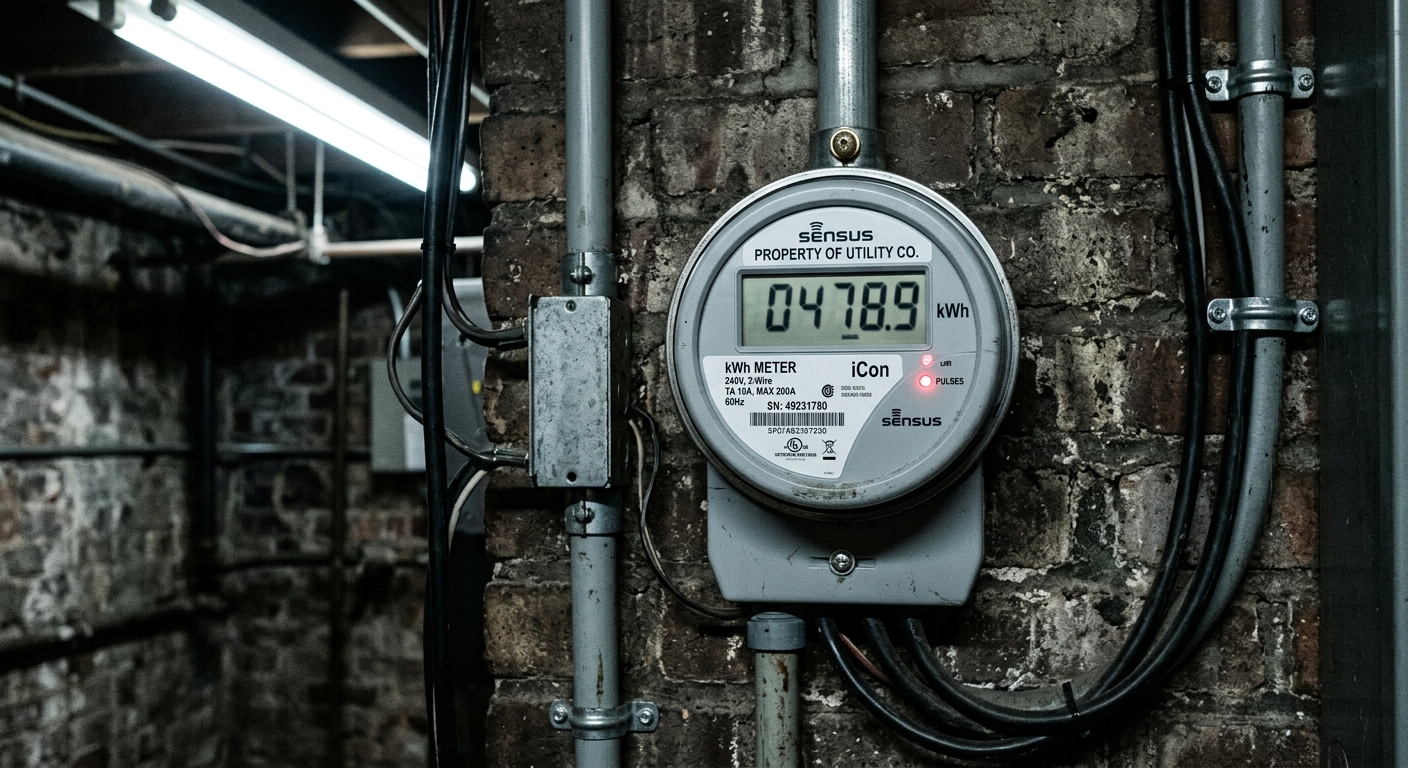
The electricity meter doesn't care how sophisticated your AI architecture is. It cares how many watts you're pulling, for how long, and whether anyone's bothered to check if all of that power consumption is actually necessary. Turns out, quite often, someone probably should.
More from Tech Trends
If you've found this useful, there are more articles where this came from. We write regularly about where technology is actually heading rather than where the press releases claim, and these will get you started.
What Cursor is actually doing when it rewrites your code (and why it feels uncomfortably accurate)
Why your AI chatbot keeps apologising (and what that reveals about how it was trained)
Here at Richah, we write about tech trends because staying current with how the landscape is shifting matters when you're building websites, software and systems that need to work properly and stay relevant beyond next Tuesday.
If you're thinking about building a website, some software or another system and want someone who understands what actually makes sense for your particular situation, get in touch. You can find out more about prices and meet us (always good to know how much and who with) below.
Why is my AI cloud bill so much higher than the proof of concept?
Your proof of concept probably ran a few hundred queries and didn't include all the production necessities. Once you're running 24/7 with proper redundancy, compliance logging, multiple agents coordinating, and governance frameworks constantly checking everything, those small costs multiply into a significant infrastructure expense that wasn't visible in the prototype.
Do agentic AI systems use more power than single AI models?
Yes, quite a bit more. Each agent runs its own inference, they constantly communicate with each other, and there's a coordination layer managing everything even when idle. The real power drain happens when agents need to backtrack or iterate on decisions—each loop means more GPU time and more electricity.
What's the easiest way to reduce AI infrastructure energy costs?
The least glamorous but often most effective approach is simply turning things off when not needed. Development environments don't need to run 24/7, and batch processes don't need reserved capacity all day. Measuring your actual usage patterns and scaling down during quiet periods usually yields easier savings than complex technical optimisations.