
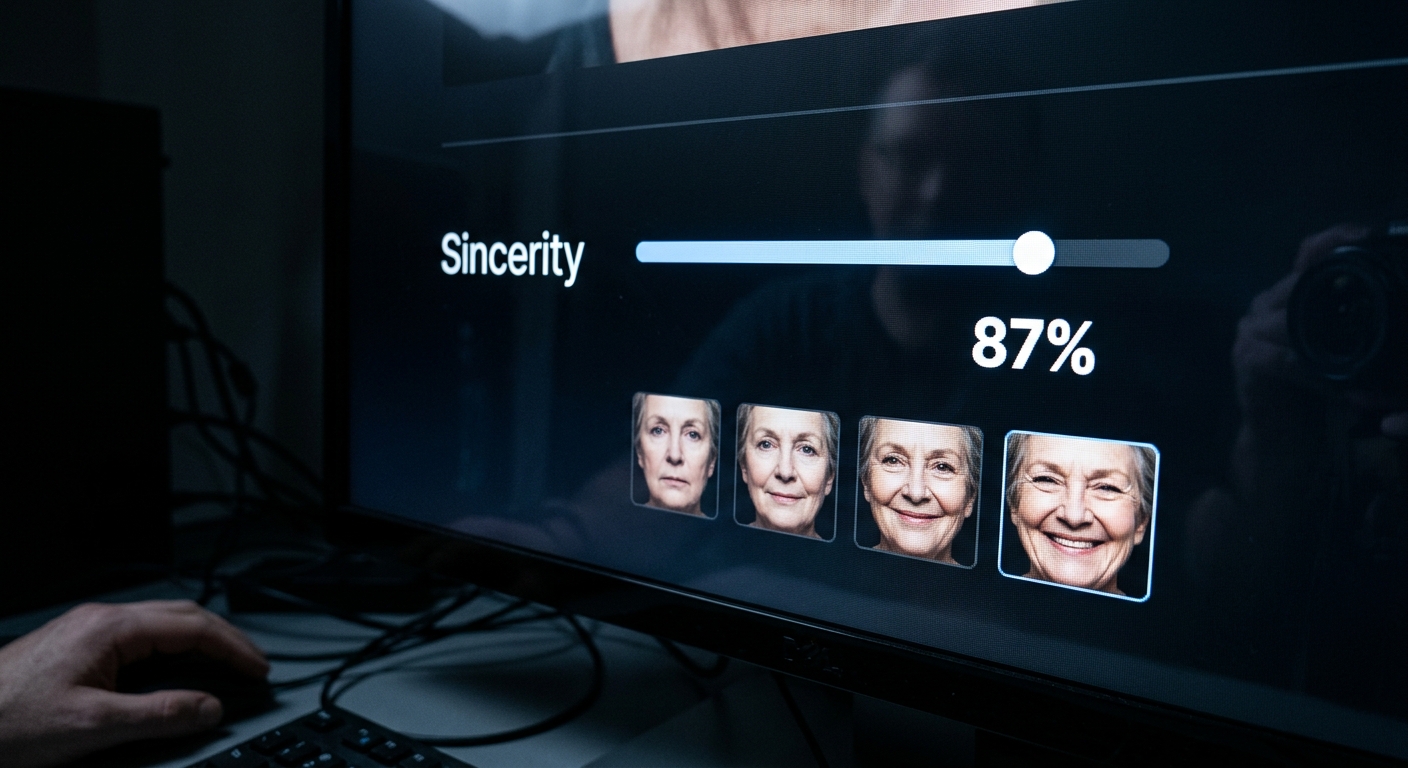
The Campaign That Worked Brilliantly Until Everyone Realised the People in It Weren’t Real
The campaign looked convincing. The presenter was warm without being overenthusiastic, the customers were delighted in a pleasantly believable way, and nobody appeared to have spent half the filming day asking where the charging cable had gone.
There was only one small complication: none of the people existed.
AI-generated actors, presenters and influencers have moved from curious demonstrations into everyday marketing tools. A business can now make a product video without hiring a studio, arranging a shoot or waiting for three people to agree on a Tuesday. That can be genuinely useful. It can also create a rather important trust problem if viewers believe they are watching a real customer describe a real experience.
The technology is not the awkward part. The awkward part is deciding what the audience is entitled to know.
Why synthetic people are so tempting
Traditional filming is not simply a matter of pointing a camera at someone who looks cheerful. There are scripts, locations, lighting, travel, retakes, editing and the discovery that the office air-conditioning is louder than the entire cast.
Synthetic production removes much of that friction. A company can produce several versions of a short advert, change the language, correct a product detail or adapt the presenter for different markets without gathering everyone again. For a small team, that may turn a useful video from an expensive ambition into something it can actually make.
There is also a practical case for using generated people in early concepts. A marketing team can test a script, rough out a scene or show a client how an idea might work before committing to a full production. Used as a planning tool, it saves time without asking anybody to mistake a prototype for reality.
Problems begin when convenience quietly borrows credibility.
An actor is not the same as a customer
Advertising has always used actors. Nobody assumes the person enjoying washing-up liquid on television has devoted their life to comparing bubbles. The arrangement is understood: this is a performance intended to demonstrate a product.
A testimonial carries a different promise. It says, implicitly or explicitly, that a real person used something and formed an opinion about it. If the smiling “customer” was generated along with their name, voice and experience, the advert has not merely used an artificial performer. It has invented evidence.
That distinction matters because people use testimonials to reduce uncertainty. They want to know whether the software was manageable, the service turned up on time or the product survived longer than the packaging. A fictional customer cannot answer any of those questions, however excellent their complexion may be.
The same applies to synthetic influencers. A clearly fictional character can be part of a campaign, much like a mascot. A supposedly independent personality recommending products to an audience is doing something else. If the audience later discovers that the personality, lifestyle and enthusiastic review were assembled by software, the recommendation tends to lose a little of its sparkle.
The campaign can work and still damage the brand
Marketing reports are fond of immediate results: views, clicks, enquiries and sales. Synthetic creative can perform well against all of them. It is quick to test, easy to vary and capable of looking polished on a modest budget.
Trust rarely appears in the same report.
The cost arrives later, when someone notices an odd detail, asks whether the presenter is real and receives an evasive answer. The story then stops being about the product and becomes a discussion about what the company hoped nobody would spot. A campaign that delivered an impressive click-through rate may also have taught its audience to examine every future claim with suspicion.
This is especially risky for businesses selling judgement, care or reliability. A solicitor, financial adviser, healthcare provider or home-services company is asking customers to trust real people with consequential decisions. Filling the website with invented humans may be technically efficient, but it creates the peculiar impression that the company could not find anybody real willing to stand beside it.
Disclosure should be useful, not theatrical
There is no need to attach a solemn warning to every generated background face in an obviously illustrative scene. Disclosure is most useful where the artificial element could change how a reasonable person interprets the message.
If a generated presenter is simply explaining three features from a script, a clear note that the presenter is AI-generated may be enough. If the video depicts a customer experience, the better answer is not a smaller note. It is to use a real customer, or rewrite the piece so it no longer pretends to be one.
The wording should be plain and easy to find. “Digitally created presenter” is understandable. Hiding the point inside a page of terms, next to the competition rules and the office postcode, rather defeats the purpose.
Businesses should also consider what happens after the advert leaves their own website. Clips are reposted, shortened and shared without their original captions. If the context is essential to understanding what viewers are seeing, it needs to travel with the content rather than remain behind on a forgotten landing page.
Where synthetic campaigns are genuinely useful
There are sensible uses that do not depend on misleading anybody.
A generated presenter can turn written help into a clear video, produce consistent versions in several languages or explain product updates that change too often to justify a new shoot each month. Artificial characters can illustrate a hypothetical situation, make internal training less dreary or provide temporary creative while a full campaign is being developed.
They can also improve accessibility and reach when used thoughtfully. The important point is that the value comes from communicating the information well, not from persuading viewers that an invented person has lived through something they have not.
Real people still matter most when the person is the proof. Customer stories, founder interviews, staff introductions and expert opinions work because somebody is willing to attach their identity and experience to what is being said. The occasional pause, imperfect sentence or glance away from the lens is not necessarily a production flaw. It is often the part that makes the material believable.
Five questions before an artificial person goes live
Before publishing, it helps to ask a few unglamorous questions.
First, could an ordinary viewer reasonably think this is a real employee, customer or independent reviewer? If so, make the position clear.
Second, is the person merely presenting information, or are they being used as evidence that the product works? The latter needs a real basis.
Third, would the campaign still feel honest if its production method appeared in the first comment beneath it? If that possibility causes a sudden meeting, something probably needs changing.
Fourth, who has checked the script, product claims, pronunciation and visual details? Synthetic production is fast, including when it is producing the wrong answer.
Finally, is using an artificial person helping the audience, or only helping the production schedule? Saving time is a perfectly respectable reason, but it does not excuse borrowing trust that was never earned.
Good marketing does not need a secret
AI-generated people will become more ordinary, and audiences will become better at recognising them. The lasting question is not whether a campaign used AI. It is whether the campaign made a fair promise.
Use synthetic presenters where they make useful information easier to produce and understand. Use fictional characters when everybody is in on the fiction. Keep genuine customer experiences attached to genuine customers.
A campaign should be memorable because it explained something well, not because the public conducted a week-long investigation into the presenter’s number of fingers.
More from Marketing
If you enjoyed this article, there is plenty more in our Marketing section. We look at the practical decisions behind finding the right audience, explaining what you do and working out whether the activity is producing anything more useful than an attractive chart. These should give you a few good places to start.
Why your marketing probably shouldn't be on TikTok (even though everyone says it should)
The Three-Option Trick: Letting Your Pricing Do the Selling For You
The "First Date" Rule: Don’t Propose to Your Customers Too Fast
Why we write about marketing
We write about marketing because a website cannot do its job in splendid isolation. When we build one, we think about how the right people will find it, what they need to understand and what should happen next. We can also look after that work on an ongoing basis, so the site continues to earn its keep after the launch biscuits have disappeared.
If you would like us to build your website, improve the one you have or take care of its ongoing content and marketing, get in touch. We will listen to what the business actually needs, explain the sensible options and build something useful around it.
Ongoing Website Management Prices
Do I need to tell people if I'm using AI-generated people in my marketing videos?
Yes, if a reasonable viewer might think they're watching a real customer, employee, or reviewer. You don't need a warning for obviously illustrative scenes, but if the artificial element could change how someone interprets your message — especially testimonials or customer experiences — make it clear and easy to find.
What's the difference between using an actor and using an AI-generated customer in an advert?
An actor performing in an advert is understood to be a demonstration, but a testimonial promises that a real person used your product and formed an opinion. An AI-generated 'customer' isn't demonstrating — it's inventing evidence that doesn't exist, which is fundamentally dishonest when people are looking for genuine experiences to help them decide.
Can using AI presenters damage my brand even if the campaign gets good results?
Yes, absolutely. A campaign might deliver impressive clicks and views, but if people later discover you used fake people without being upfront about it, the story becomes about deception rather than your product. That loss of trust is especially damaging if your business depends on credibility, like financial services, healthcare, or legal advice.