
The Retail Media Gold Rush
If you've noticed that every major retailer now seems to have its own advertising platform, you're not imagining things. Tesco, Sainsbury's, Boots, even John Lewis—they've all launched what the industry calls "retail media networks." Essentially, these are ad platforms that let brands pay to appear more prominently on the retailer's website, app, or even in-store displays. And judging by the money pouring into them, brands seem quite keen on the idea.
For small businesses watching this unfold, it raises a reasonable question: does this change anything about how you reach customers, or is it simply another arena where you're expected to spend money you probably don't have?
What Retail Media Actually Means
At its simplest, retail media is advertising space sold by retailers. When you search for coffee on Tesco's website and see certain brands appear first in the results, or when a product gets a prominent "featured" spot, there's a decent chance someone paid for that placement. The retailer gets a new revenue stream, the brand gets visibility at the exact moment someone's ready to buy, and theoretically everyone wins.
The appeal for brands is fairly obvious. Traditional advertising happens somewhere else—on telly, on social media, in magazines—and you're trying to convince people to remember your product when they eventually get round to shopping. With retail media, you're advertising right there on the shop floor, digital or otherwise, at the precise moment when people have their wallets out. The conversion rates tend to be rather better than hoping someone remembers your billboard when they're standing in the cereal aisle three days later.
For retailers, it's become a significant income source. Their own websites and apps have become valuable advertising real estate, and they're sitting on mountains of customer purchase data that make targeting quite sophisticated. They know what you bought last week, what you usually buy, and what you're probably about to run out of. That's genuinely useful information if you're trying to sell someone something.
Why Everyone's Suddenly Interested
Retail media has been around in various forms for years—end-of-aisle displays and shelf positioning have always been negotiable—but the digital version has exploded recently. There are a few reasons for this sudden enthusiasm.
First, online shopping became rather more popular over the past few years, for obvious reasons. More people shopping online means more digital shelf space to sell. Second, traditional digital advertising has become more complicated and expensive, particularly as privacy regulations limit how much companies can track people around the internet. Retail media sidesteps some of those issues because the retailer already has a direct relationship with the customer.
Third, and perhaps most importantly, retail media is proving quite profitable for retailers whose traditional margins are often thin. When you're making a few pence on a tin of beans, selling advertising space for that bean shelf starts to look quite attractive.
The Small Business Perspective
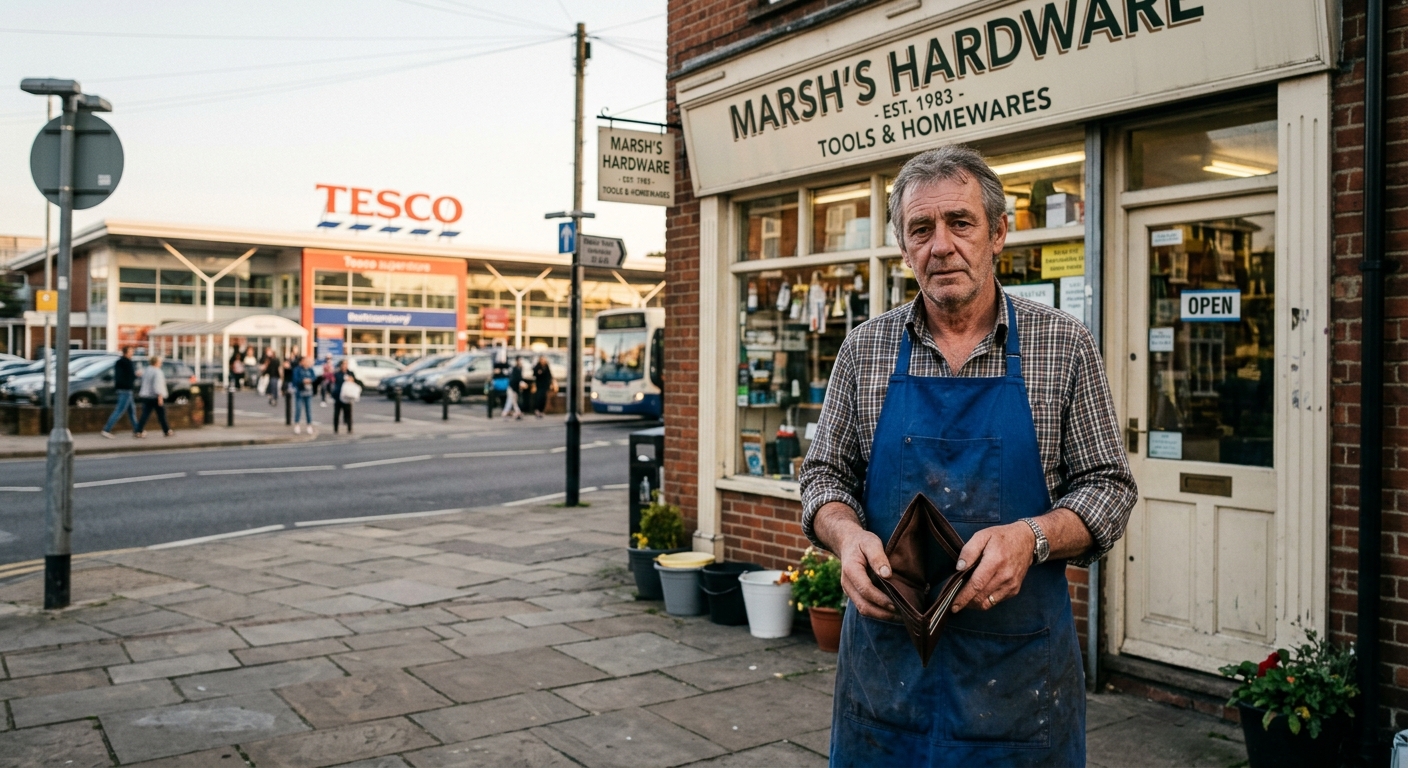
So where does this leave smaller businesses? The honest answer is: mostly on the outside looking in. Retail media platforms are generally designed for brands with substantial budgets and national distribution. If you're not already on Tesco's shelves, you're not going to be advertising on their website. The minimum spends can be considerable, and the platforms themselves often require a level of sophistication—and dedicated personnel—that most small businesses simply don't have.
That said, the principles behind retail media aren't entirely irrelevant to smaller operations. The fundamental idea—advertising at the point of purchase rather than hoping people remember you later—is sound. You just need to apply it at your own scale.
If you sell through your own website, think about how people find products once they're there. Is your search function actually useful? Do related products appear when they might be helpful? These aren't paid placements, obviously, but they're the same principle: putting the right product in front of someone at the right moment.
If you sell through platforms like Amazon, Etsy, or eBay, they have their own advertising options at various price points. These are essentially retail media networks for smaller sellers, and whilst they're not cheap, they're at least accessible. Whether they're worth it depends entirely on your margins and what you're selling, but they exist.
The Broader Implications
The rise of retail media does shift where advertising money flows, which has knock-on effects. Traditional publishers—newspapers, magazines, websites—are competing with retailers for advertising budgets. If brands spend more on retail media, they spend less somewhere else. For small businesses, this might actually mean some traditional channels become slightly more affordable as big brands redirect their budgets. Or it might not. It's difficult to predict these things with any certainty.
There's also a question about whether retail media actually serves customers well. When search results are influenced by who's paid the most, you're not necessarily seeing the best product or the best value—you're seeing whoever has the biggest advertising budget. Most platforms do mark paid placements as "sponsored," but the distinction isn't always obvious. As a customer yourself, it's worth keeping in mind that the first result isn't always the best result.
Should You Care?
For most small businesses, retail media networks are something to be aware of rather than something to actively participate in. Unless you're already selling through major retailers and have a marketing budget to match, you're not missing out on anything immediately actionable.
What is worth thinking about is the underlying principle: meeting customers where they're already making decisions, rather than trying to implant your brand in their memory weeks in advance. That might mean improving your own website's navigation, investing in better product photography, writing clearer descriptions, or making sure people can actually find what they're looking for when they're ready to buy.
The retail media gold rush is real, and the big players are making serious money from it. But like most gold rushes, the people getting rich are often the ones selling the shovels—in this case, the retailers themselves. For everyone else, it's business as usual: work out where your customers are, figure out how to reach them effectively, and don't spend money you can't afford on advertising that doesn't work. Revolutionary stuff, clearly.
More on Marketing
If you found this useful, we write quite a bit about marketing and how it works in practice rather than in theory. We have plenty more articles that take a similar approach—looking at what actually matters for businesses trying to reach customers without spending a fortune or getting tangled in the latest trend. Here are a few to get you started.
The honest reason most small business blogs fail (and it's not the writing)
The "First Date" Rule: Don’t Propose to Your Customers Too Fast
The Three-Option Trick: Letting Your Pricing Do the Selling For You
Why We Write About This
We write about marketing because it's part of our job. When we build your website, thinking about how people will find it and use it isn't some optional extra—it's central to making something that actually works. We also offer an ongoing management service where we take care of these things for clients who'd rather focus on running their business than wrestling with website updates and marketing strategies. Both of these things work better when we actually understand how people find and choose products, which is why we pay attention to trends like retail media even when they're not directly applicable to most of our clients.
Shall We Build You Something?
If you'd like us to build you a website that people can actually use, or if you're tired of trying to manage your existing site on top of everything else you're supposed to be doing, get in touch. We're quite good at this, we explain things in actual English, and we don't try to sell you things you don't need. Which feels like it should be the minimum standard but apparently isn't.
Why are retailers suddenly launching their own advertising platforms?
Three main reasons: online shopping has exploded, traditional digital advertising has become more expensive and complicated due to privacy regulations, and it's genuinely profitable for retailers who usually make thin margins on actual products. When you're making pennies on a tin of beans, selling the advertising space for that shelf becomes quite attractive.
What exactly is retail media?
It's advertising space sold by retailers on their own websites, apps, or in-store displays. When you search for coffee on Tesco's website and certain brands appear first, someone likely paid for that placement—it puts advertising right at the point of purchase rather than hoping customers remember a billboard days later.
Should I worry about retail media if I run a small business?
Not really—it's something to be aware of rather than participate in. What is worth thinking about is the underlying principle: meet customers where they're already making decisions. That might mean improving your own website's navigation, better product photos, or making sure people can find what they're looking for when they're ready to buy.