
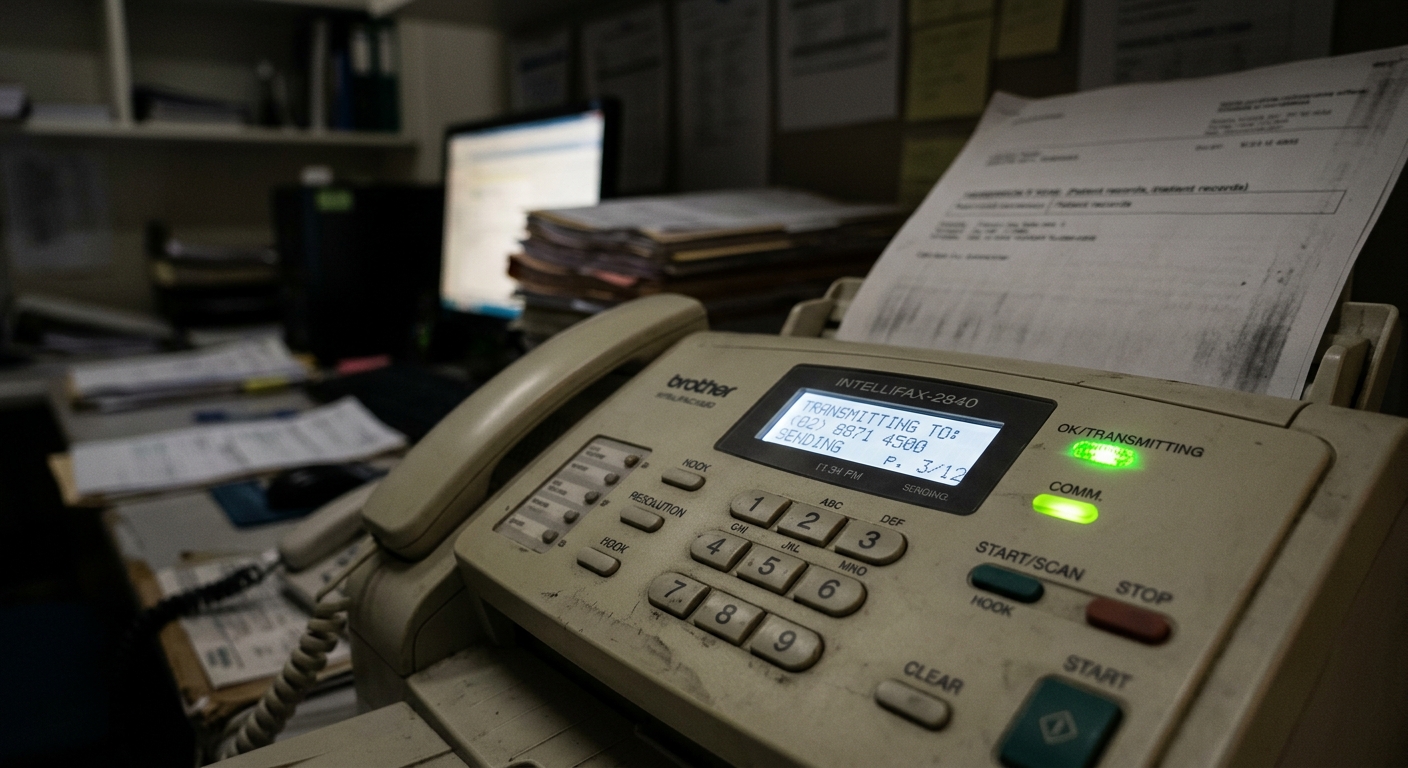
the surprising longevity of fax machines
Walk into most modern offices and you'll find touchscreens, cloud servers, and enough dongles to start a small electronics shop. Walk into a law firm or hospital, and you'll also find something rather more unexpected: a fax machine, quietly humming away like it's still 1987 and Gordon Gekko is waiting for that property contract.
Email was supposed to kill the fax. So were scanners, PDFs, encrypted messaging apps, and about seventeen different "digital transformation" initiatives. Yet here we are, well into the 21st century, and fax machines refuse to die. They're the Keith Richards of office equipment—battered, seemingly obsolete, but somehow still turning up for work.
Why fax machines won't bugger off
The thing is, fax machines have something most modern technology doesn't: legal weight that nobody's quite managed to argue away. In many jurisdictions, a faxed signature holds up in court with far less fuss than a PDF someone's emailed over. It's not that faxes are more secure—they're decidedly not—but they operate on a direct phone line, which means there's a transmission confirmation, a phone number record, and a dated, time-stamped trail that's harder to dispute than "I definitely sent you that email, check your spam folder."
This matters enormously in fields where documentation isn't just important, it's legally essential. Medical records, prescription orders, property transactions, court filings—these aren't things you want bouncing around in the cloud, waiting for someone to tick the wrong privacy setting. A fax goes from Point A to Point B via a dedicated line, and whilst someone could theoretically intercept it, they'd need physical access to the phone line rather than just a decent password-guessing algorithm and a VPN.
Japan's fax affair
Nowhere is the fax machine more beloved than Japan, where it remains the communication method of choice for everything from restaurant reservations to government paperwork. This isn't technological backwardness—Japan has some of the fastest internet on the planet—it's cultural preference mixed with practical reality.
Japanese business culture values tangible proof of communication. That little confirmation slip a fax machine spits out? That's not just a receipt, it's evidence. It's a physical record that you sent something, when you sent it, and that it was received. Email can vanish into spam filters, get lost in overflowing inboxes, or be claimed never to have arrived. A fax confirmation slip is remarkably hard to argue with.
There's also the hanko situation. Traditional Japanese business documents require a personal seal—a hanko—rather than a signature. You can't exactly press your hanko onto an email. You can press it onto paper, fax that paper, and the person on the other end receives a document that, whilst technically a copy, maintains the visual authority of the original seal. It's authenticity theatre that actually works.
The medical world's stubborn hold-out
Healthcare remains fax country. Hospitals, GP surgeries, and pharmacies shift patient information around via fax with a determination that baffles IT departments everywhere. The reason? HIPAA compliance in the US, GDPR in the UK, and similar privacy regulations globally all recognize fax as an acceptable method of transmitting sensitive information.
Modern encrypted email should, in theory, be more secure. In practice, getting multiple healthcare organizations to agree on compatible secure email systems is like herding cats through a car wash. Fax machines, meanwhile, just work. They speak a universal language: that distinctive screeching handshake sound that means "yes, hello, I am also a fax machine, let us exchange documents."
There's also the question of workflow. Many medical practices have decades of procedures built around fax machines. Dr. So-and-so requests records, those records get faxed over, they arrive in the right place, someone files them. It works. Replacing that with a digital system means training staff, managing passwords, dealing with software updates, and inevitably fielding phone calls about why the system's down and could you just fax it instead?
The legal profession's comfort blanket
Solicitors love fax machines for the same reason they love precedent: it's established, it's accepted, and nobody can get shirty about it later. Court filing systems still accept—and in some cases prefer—faxed documents. Time-sensitive legal filings often get faxed because the transmission record provides ironclad proof of when something was submitted.
Try telling a judge that your crucial court filing is definitely in their email somewhere, they just need to search for it. Then try showing them a fax confirmation from two hours before the deadline. Which one sounds more convincing?
The legal world moves slowly by design. Fax machines got grandfathered into the system before anyone thought too hard about digital alternatives, and now they're entrenched. They're the technological equivalent of court wigs—nobody would invent them now, but good luck getting rid of them.
The false death of physical documents
We were promised the paperless office sometime around 1975. It hasn't arrived yet, and probably never will. Humans like paper. We like physical records, tangible proof, something we can hold and file and retrieve without wondering which folder we saved it in or whether the cloud service has gone down.
Fax machines exist in the uncomfortable middle ground between fully digital and fully physical. You get a paper document at the end, but it's been transmitted electronically. For people who don't quite trust pure digital communication but recognize that posting things is painfully slow, fax is the compromise position.
It's also remarkably simple. There are no apps to download, no accounts to create, no two-factor authentication codes arriving three minutes after you've given up. You put paper in one end, dial a number, and paper comes out the other end. My gran could use a fax machine. My gran cannot use DocuSign.
The internet fax compromise
Recognizing that actual fax machines are a bit of a faff—they jam, they need phone lines, they consume ink cartridges with the efficiency of a teenage boy consuming cereal—companies have created internet fax services. These let you send and receive faxes via email, maintaining the legal benefits of fax communication without the physical hardware.
It's a thoroughly modern solution to a vintage problem: keeping the legally-recognized format whilst ditching the inconvenient machinery. Law firms and medical practices are slowly adopting these services, getting the compliance benefits of fax without needing to maintain actual fax machines that belong in a museum next to the Betamax player.
Will fax ever actually die?
Eventually, yes. Every technology has its sunset, and fax's has been lingering rather longer than most. As younger lawyers and doctors who've never used a fax machine outside of work rise through the ranks, and as legal frameworks catch up with encrypted digital communication, the practical reasons for fax will erode.
But that "eventually" might be further off than you'd think. Technology doesn't disappear just because something newer exists—it disappears when the last person who needs it retires or the last regulation requiring it gets updated. Given the pace at which legal and medical systems change, we'll probably have flying cars before we have fax-free hospitals.
And honestly? There's something quite comforting about that. In a world of planned obsolescence and mandatory upgrades, where your phone badgers you about updates and your software subscription just went up again, the fax machine endures. It does one thing, it does it adequately, and it doesn't require a software engineering degree to operate. That's not cutting-edge, but it is rather refreshing.
More vintage tech that refuses to quit
If you've enjoyed this dive into stubborn technology that won't take the hint, you'll find plenty more where this came from in our Retro Tech section. We've got a soft spot for the obsolete-but-not-quite, the superseded-but-still-useful, and the ancient-but-somehow-essential. Here are a few to get you started:
Why cassette tapes are making an unlikely comeback
The dot matrix printers still running in warehouses worldwide
Pagers in hospitals: old-fashioned or just sensible?
The enduring appeal of mechanical keyboards
Why we write about old tech
We write about retro technology for a simple reason: it got us here. Every piece of modern software, every sleek website, every app you can't quite remember downloading—they're all built on foundations laid by technology that now seems charmingly vintage. Understanding where we've been helps us build better things going forward, and there's genuine value in recognizing what worked about older systems before we rush to replace them with something newer and theoretically better.
Wrestling with Clippy in Early Microsoft Office
Watching the Blocks Move in Disk Defragmenter
This isn't nostalgia for its own sake. It's about understanding why certain technologies stick around, what human needs they fulfill, and how we can design modern systems that actually serve people rather than just looking impressive in a product demo. We've built websites, created software, and developed digital tools with this philosophy—make it useful, make it reliable, and make it something people actually want to use rather than have to use. Take a look at some of the things we've made to see what we mean:
TrailTrack - The Best Ever Outdoor Hiking Website
Want to work with us?
If you'd like us to build you a website that people will actually enjoy using, create some software that solves real problems rather than creating new ones, or just have a conversation about what you need without the usual sales nonsense, we'd be delighted to hear from you. Get in touch, and we'll take it from there—no fax required.
For prices then please see the top of the page. Remember, those are guide prices only, we can only give accurate prices when we know what you want.
Why do hospitals still use fax machines instead of secure email?
Because fax meets HIPAA and GDPR requirements out of the box and works across any provider, while setting up compatible encrypted email systems is complex and costly.
Is faxing more secure than sending documents over email?
No, fax isn’t inherently more secure, but it does provide a physical phone-line trail and a printed receipt that are harder to dispute than an email that could disappear into spam.
Will fax machines eventually disappear from legal and medical fields?
Eventually, yes—once regulations and industry practices fully embrace encrypted digital alternatives, the need for fax will fade, though that transition could take many years.