
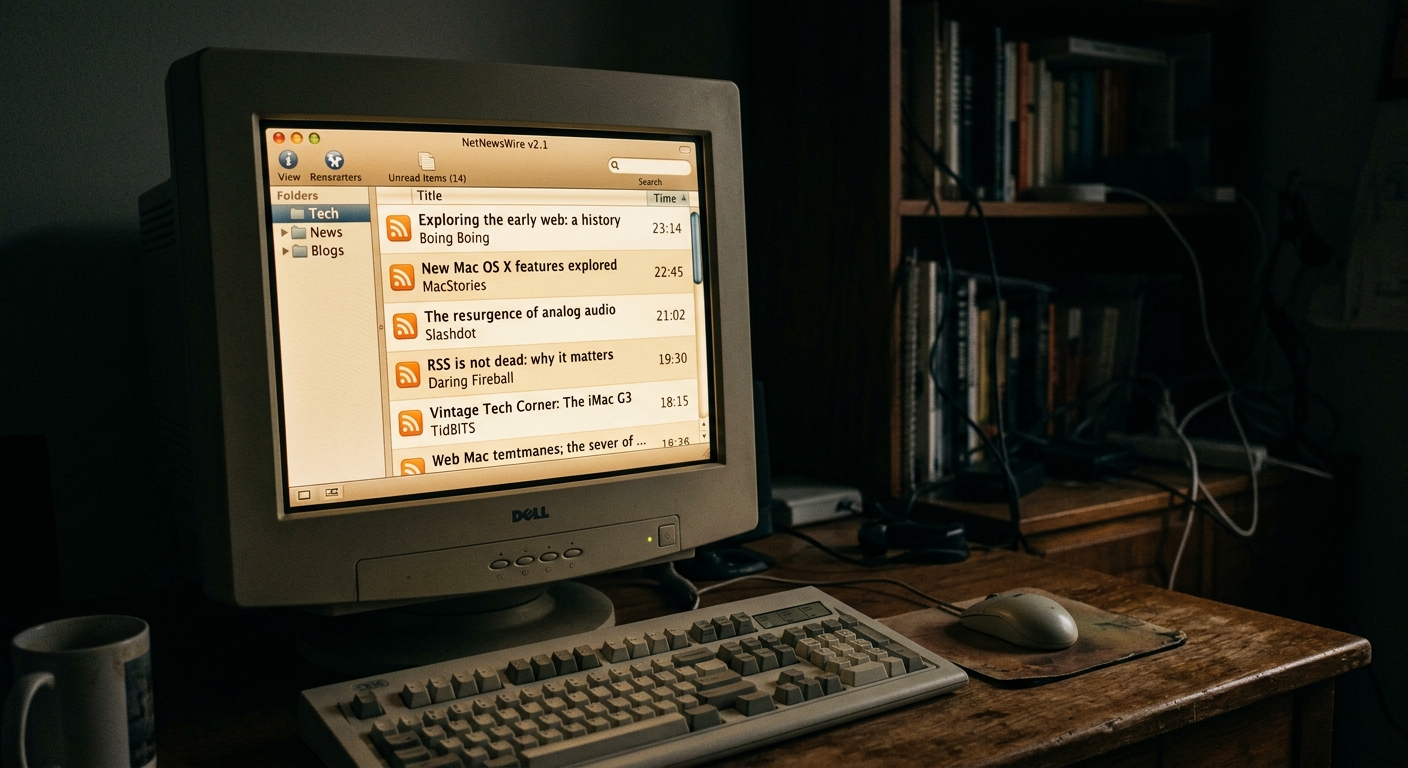
RSS Never Died. It Just Waited for Everyone to Get Tired of the Algorithm
There's a vindication in watching something you never stopped using suddenly become fashionable again. RSS — Really Simple Syndication, if you're keeping score — has spent the last decade or so being declared dead by people who'd moved on to algorithmic feeds. Meanwhile, it's been quietly doing exactly what it always did: delivering content from sources you chose, in the order it was published, with nobody's engagement metrics involved.
The technology itself is wonderfully straightforward. A website publishes an RSS feed, which is essentially a structured list of its content. You add that feed to a reader, and new items appear as they're published. No algorithm decides that you'd be more interested in something from three days ago. No platform inserts content from accounts you don't follow because someone you vaguely know liked it. You subscribe to what you want, and that's what you get.
The Algorithm Wasn't Always the Point
When social media platforms first arrived, they worked rather like RSS with a social layer. You followed people and saw their posts in chronological order. Twitter showed you tweets from accounts you'd chosen to follow. Facebook displayed updates from your actual friends. The chronological timeline wasn't a feature anyone thought to mention because it was simply how things worked.
Then came the shift. Platforms realised that deciding what you see keeps you scrolling longer than a simple chronological feed. An algorithm could surface content designed to provoke reaction, insert advertisements more naturally, and generally keep people on the platform. The chronological feed became a quaint relic, something platforms occasionally offered as a setting buried three menus deep before quietly removing it again.
RSS never made that shift because it couldn't. There's no central platform to insert an algorithm. It's a file format, a standard for syndicating content. You can't monetise it in any meaningful way, which turned out to be either its fatal flaw or its saving grace, depending on your perspective.
What Kept Working While We Weren't Looking
The supposed death of RSS was greatly exaggerated, largely because people conflated Google Reader shutting down with the technology itself disappearing. Google Reader was popular, certainly, but it was one service using an open standard. When it closed in 2013, dozens of alternatives already existed, and more appeared.
Podcasts, for instance, are essentially RSS feeds with audio files attached. Every podcast app is an RSS reader, whether it calls itself that or not. When you subscribe to a podcast, you're subscribing to an RSS feed. The technology underpinning the entire podcast ecosystem is the same standard that people kept declaring obsolete.
Email newsletters generally work on their own infrastructure rather than RSS, though plenty of publishers offer both newsletters and RSS feeds for the same content. Some publishing tools might use RSS feeds internally to power various features, but your typical newsletter subscription isn't an RSS feed in disguise. YouTube channels have RSS feeds. So do most blogs, news sites, and publications, even if they don't prominently advertise the fact.
Why It Suddenly Feels Appealing Again
Something shifted in the last few years. Perhaps it was the realisation that algorithmic feeds aren't neutral. They're designed to maximise engagement, which often means prioritising content that provokes strong reactions. You might follow someone for their thoughts on architecture and find yourself reading their heated argument about something completely unrelated because the algorithm determined that argument would keep you scrolling.
Subscription fatigue plays a role too. Every publication wants you to subscribe, every platform wants you to pay for premium features, every service offers a tier that removes some arbitrary limitation. RSS feeds are generally free because they're just another way of accessing content that's already published on the website. No paywall can be added to RSS itself, though publications can certainly limit what appears in their feeds.
There's also something refreshing about content appearing when it's published rather than when an algorithm decides you should see it. You check your feed reader when you want to, read what interests you, and ignore the rest. Nothing is trying to predict what you'll engage with or surface day-old posts because they're suddenly getting attention.
The Practical Reality of Using RSS Now
Using RSS in 2025 requires a feed reader, which is simply an application that checks your subscribed feeds and displays new items. Plenty exist, from simple web-based options to elaborate applications with filtering and organisation features. Some sync across devices, others are standalone. Most are either free or cost less than a single streaming service subscription.
Finding feeds is sometimes the tricky bit. Many websites still publish RSS feeds but don't prominently link to them. Browser extensions can detect feeds on pages you visit. Some readers can automatically find feeds when you enter a website URL. Once you've added feeds for the sites you actually want to follow, you have a personalised news source that nobody's trying to optimise for engagement.
The experience is wonderfully boring in the best possible way. New items appear. You read them or you don't. Nothing is algorithmic. Nothing is trying to predict your interests or show you content from accounts you don't follow. It's just a list of new things from sources you chose, which is exactly what it should be.
More From Our Retro Tech Collection
If this particular trip down technology's memory lane appealed to you, we've written quite a bit more about technologies that never quite disappeared, just became unfashionable. Our Retro Tech section covers everything from the surprising resilience of older formats to the reasons some "obsolete" technologies still work better than their replacements.
Why We Write About This
We're rather fond of retro technology here, partly because it's interesting, but mostly because understanding what came before is genuinely useful. The way we build things now — websites, applications, digital tools — makes considerably more sense when you understand the problems previous technologies were solving and why certain approaches survived while others didn't. The things we create today are built on foundations laid by technologies that many people have forgotten about, and we think that's worth remembering.
If You Need Something Built
We design and build websites, create software, and generally make digital things that work properly. If you need something built with actual thought behind it rather than just the latest trend slapped together, we'd be happy to talk. Get in touch and we'll have a proper conversation about what you actually need, not what some marketing department thinks you should want.
How We Build Custom Software Around Your Business
How do I actually find RSS feeds for websites I want to follow?
Many websites still publish RSS feeds but don't advertise them prominently. Browser extensions can detect feeds on pages you visit, and most feed readers will automatically find feeds when you simply enter a website URL.
Are podcasts really just RSS feeds?
Yes, podcasts are essentially RSS feeds with audio files attached. Every podcast app is technically an RSS reader — when you subscribe to a podcast, you're subscribing to an RSS feed.
Can websites put their RSS feeds behind a paywall?
Publications can limit what content appears in their RSS feeds, but RSS itself can't have a paywall added to it. Generally, RSS feeds provide another way to access content that's already published on the website.