
The sound your dial-up modem made (and what it was actually doing)
If you were online in the 1990s or early 2000s, you'll remember the sound. That cacophony of bleeps, static bursts, and what can only be described as a robot having a minor breakdown. For about thirty seconds, your modem would screech and warble whilst everyone else in the house held their breath, hoping nobody would pick up the phone and ruin everything.
But here's the thing: that wasn't just noise. It was a conversation. Your modem was literally negotiating with another modem at your internet service provider, working out the terms of your connection in real-time, completely out loud, for anyone within earshot to hear.
Why you could hear it at all
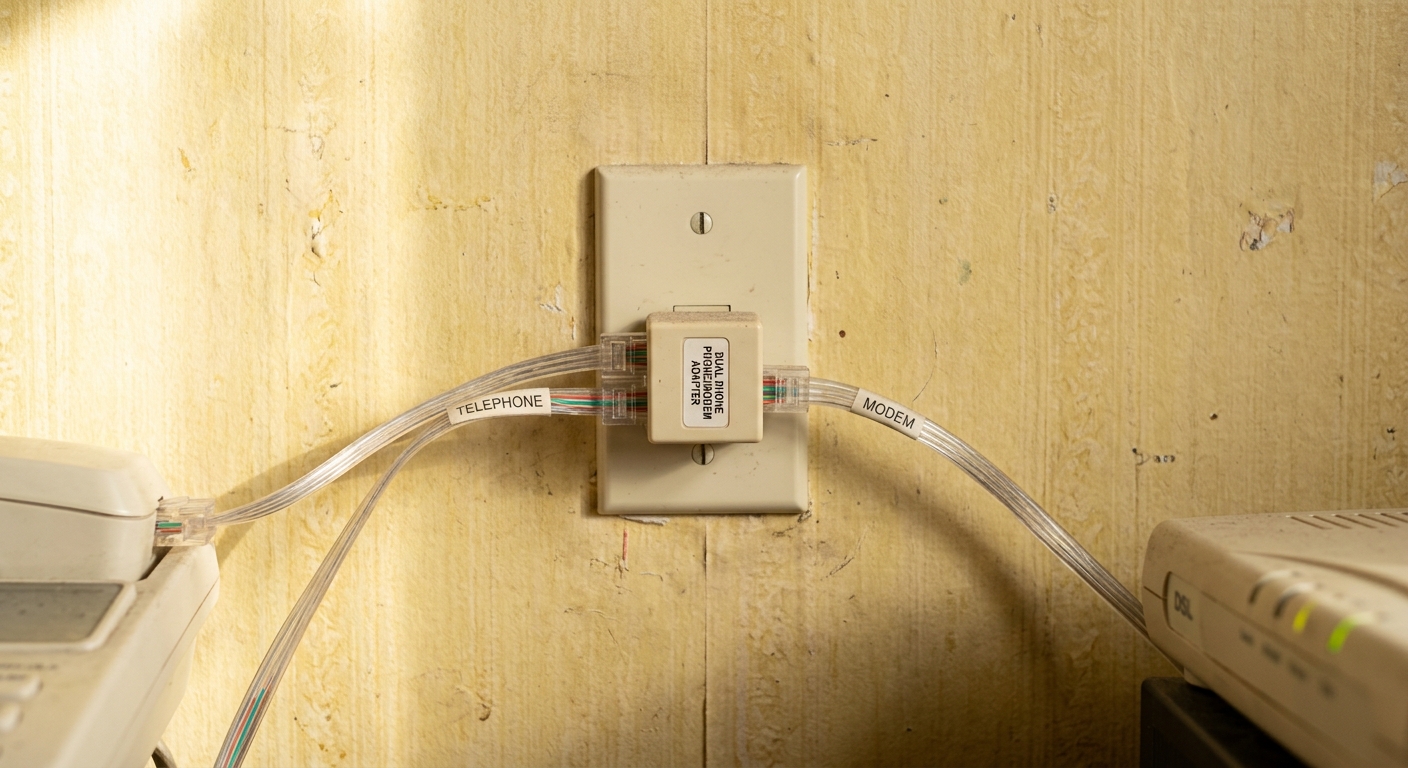
The first question is perhaps why this negotiation was audible in the first place. The answer is beautifully straightforward: your modem was using your telephone line, and telephone lines were designed for sound. They were analogue systems built to carry voices, so when your computer needed to send digital data down them, it had to convert that data into audio tones.
This is what 'modem' actually means — it's short for modulator-demodulator. The device modulated digital signals into analogue sounds to send them, then demodulated incoming sounds back into digital data. Early modems had their speakers on by default, so you could hear this conversion happening. Partly this was for diagnostic purposes — engineers and tech support could actually listen to the handshake and identify problems — but mostly it was just a consequence of the hardware.
You could turn the speaker off once you got more confident, but most people left it on. It became a sort of progress bar for the ears, letting you know things were happening.
The handshake, step by step
That thirty-second symphony had structure. It was called a handshake, which is a rather polite term for what sounded like a fax machine being murdered.
First came the dial tone, followed by the touch-tone beeps of your modem dialling the ISP's number. So far, so normal — this was just using the phone line as intended. Then someone at the other end picked up, except it wasn't a person, it was another modem.
What followed was the two modems introducing themselves and figuring out what they were both capable of. The screeching and warbling was them testing different frequencies and speeds, essentially asking each other "Can you hear this? What about this? How fast can you go?"
They were negotiating the connection speed, working out what compression methods to use, and agreeing on how they'd handle errors. Different modems had different capabilities — a newer 56K modem connecting to an older 33.6K modem would need to agree on a speed they could both manage. They'd test the quality of the phone line, check for interference, and settle on the best parameters for that particular connection at that particular moment.
The static and noise you heard was them running through these options, sending test signals back and forth. When you heard the pitch change or the rhythm shift, that was them switching between different modes and methods. And when everything finally went quiet, that meant they'd agreed on terms and the connection was established. Your modem's speaker would cut out (or you'd hear a final hiss of carrier signal) and you were online.
Why it took so long
Thirty seconds feels like an eternity when you're desperate to check your email or load a website. But your modem was doing something rather clever within significant constraints.
The telephone network was never designed for data. It was built to carry human voices, which occupy a relatively narrow range of frequencies. Your modem had to work within those limitations, finding ways to encode digital information as audio tones that the phone system wouldn't mangle too badly.
The quality of the connection varied enormously depending on factors like how far you were from the telephone exchange, how old the wiring was in your house, and whether it was raining. The handshake had to account for all of this. It wasn't just establishing any connection — it was establishing the best possible connection under current conditions.
Modern devices do something similar, but they do it in milliseconds using purpose-built digital infrastructure. Your modem was doing it through a phone line that might have been installed when Churchill was Prime Minister, so a bit of patience was required.
The variations in the noise
Not all modem handshakes sounded identical. If you were particularly attuned to it — and plenty of people were — you could tell different modems apart by their handshake sounds, or identify when the connection was likely to fail based on what you heard.
A smooth, relatively quick handshake meant a good quality line and two modems that spoke similar languages. A longer handshake with lots of screechy back-and-forth meant they were struggling to agree, perhaps because of line noise or mismatched capabilities. Sometimes the handshake would get almost to the end and then start over, which usually meant it had detected a problem and was trying again with different settings.
Some people developed an almost superstitious relationship with the sound. They'd stay very still during the handshake, convinced that moving around might somehow interfere with the connection. Others would hold their breath during the final stages, as if that might help. It didn't, obviously, but the ritual made the waiting more bearable.
Why we don't hear it anymore
Broadband connections still do a handshake of sorts — your router still negotiates with your ISP's equipment — but it happens silently and much faster. Partly that's because broadband uses digital connections rather than analogue phone lines, so there's no audio component to leak out. Partly it's because the technology is simply better and faster.
But something was lost when connections became silent and instant. The modem handshake was a reminder that getting online required effort and negotiation. It was a liminal space between offline and online, a moment of transition that gave you time to prepare for entering the internet.
Now we expect to be online instantly, all the time, and we get frustrated when our connection drops for even a few seconds. Perhaps occasionally we could do with being reminded that what we're doing is actually quite remarkable — sending data across the world in fractions of a second — and that the engineers who made it work through telephone lines designed for talking were genuinely clever.
More where this came from
If this trip down telephone-line memory lane appealed to you, you'll be pleased to know we write about retro technology quite regularly. There's something satisfying about understanding how things used to work, especially the ingenious workarounds engineers developed when they didn't have the luxury of modern infrastructure. Have a browse through our Retro Tech section — there's plenty more to discover. Here are a few to get you started.
Writing Your First Site in Notepad
When Windows XP refused to die (and why IT departments were still clinging to it in 2014)
Why we write about old tech
We don't bang on about dial-up modems and vintage computing just for nostalgia's sake, though there is a bit of that. The truth is, understanding where technology came from helps us build better things today. Those engineers working within the constraints of telephone lines and limited bandwidth had to be creative in ways that modern abundance sometimes lets us forget.
The work we do now — building websites, creating software, solving technical problems for clients — rests on foundations laid by people who had to make computers talk to each other through infrastructure that was never meant for the job. That kind of resourcefulness is worth remembering and, occasionally, worth writing about. If you've not seen our work before, then now is your chance:
Shall we build you something?
Speaking of building things: if you need a website, some software, or help with a technical project, we'd be happy to have a conversation about it. We approach problems the way those modem engineers did — working out what you actually need, what constraints exist, and what the cleverest solution might be. No unnecessary noise, no endless handshaking, just competent people building useful things. We build what you actually need. Get in touch and lets talk. You can find information on prices below along with links to us, the team at Richah. Based in the Lake District, we aren't your usual coders!
Why did dial-up modems make that screeching noise?
The noise was your modem converting digital data into audio tones so it could send information through your telephone line, which was designed to carry sound. You could hear it because modems had their speakers on by default, and the whole negotiation process happened out loud over the phone line.
Could you tell if your dial-up connection would fail by the sound?
Yes, actually. A smooth, quick handshake meant a good quality line, whilst a longer, screechy back-and-forth meant the modems were struggling to agree on settings. If the handshake got almost to the end then started over, that usually meant it had detected a problem and was trying again with different settings.
Why don't modern routers make the same noise as dial-up modems?
Broadband connections still negotiate with your ISP, but they do it silently and in milliseconds using digital connections rather than analogue phone lines. Since there's no audio component and the technology is simply faster and better, there's no sound to hear.