
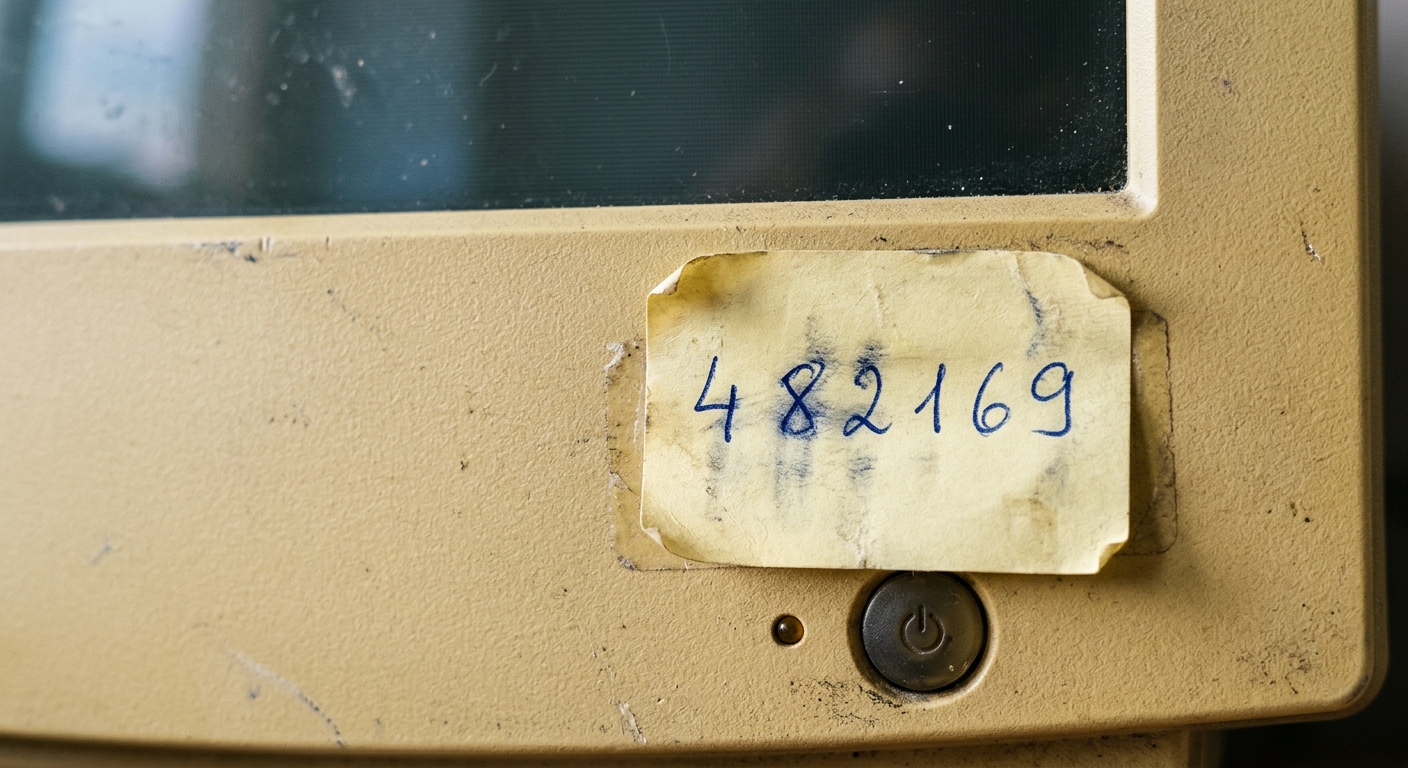
When ICQ gave you a number instead of a username (and the 'uh-oh' meant somebody had sent a message)
Long before you could claim a username with an underscore and three random digits because someone else had already taken the good one, there was ICQ. And ICQ didn't bother with usernames at all. Instead, it handed you a number—your UIN, or Universal Internet Number—and that was that. No creativity required, no agonising over whether to use your actual name or something embarrassingly edgy. Just a string of digits that became your identity on the early internet.
If you were one of the very first people to install ICQ in the mid-to-late 1990s, you might have ended up with a gloriously short number. Five digits, six digits—compact little things that you could actually remember without writing them down. This wasn't because ICQ was being generous to early adopters; it was simply how sequential numbering works. The first person got a small number, the second person got the next one, and so on. By the time the rest of the world caught on, you were looking at eight digits or more, which rather defeated the point of numbers being easier to remember than words.
The sequential assignment meant your UIN essentially announced when you'd arrived at the party. A six-digit number? You were here early, possibly before most people had heard of instant messaging. An eight-digit number? You'd turned up fashionably late, along with everyone else. There was a certain cachet to having a short UIN, though this mattered precisely not at all in practical terms. Your number worked the same whether it had five digits or ten.
The sound that defined an era
Then there was the 'uh-oh'. That distinctive two-syllable sound effect became so embedded in the cultural consciousness of anyone who used a computer in the late 1990s that you can probably hear it now, just from reading those six letters. It meant someone had sent you a message. Not an email that could wait, not a phone call you could ignore, but an instant message from someone who was online right now, expecting an actual conversation.
The 'uh-oh' was immediate and unavoidable. If your speakers were on, everyone within earshot knew you'd just received a message. This made ICQ either brilliant or terrible for workplace productivity, depending on which side of the conversation you were on. The sound itself was cheerful enough—not aggressive, not demanding, just a friendly little notification that someone wanted your attention immediately.
Of course, you could change the sound if you wanted, but most people didn't bother. The default 'uh-oh' became the sound of ICQ in the same way that the dial-up modem screech became the sound of getting online. Both were mildly annoying, both were unavoidable, and both meant you were connected to something larger than your immediate surroundings.
Your contacts lived on your computer, nowhere else
Here's something that would seem absolutely mad by today's standards: your ICQ contact list wasn't stored on a server somewhere. It lived on your computer. Your actual, physical computer. If you formatted your hard drive, or sat down at a different machine, or experienced any of the minor catastrophes that befell computers with alarming regularity in the 1990s, your contact list vanished. Gone. All those carefully added UINs, deleted.
This wasn't a bug or an oversight. It was simply how things worked before cloud storage became ubiquitous. The concept of your data following you around to whichever device you happened to be using would have seemed like science fiction. Your contacts were files on your hard drive, saved alongside everything else, backed up only if you were the sort of organised person who actually remembered to back things up.
The practical consequence was that you'd better remember your friends' UINs, or at least know where to find them again, because ICQ certainly wasn't going to remember for you if something went wrong. Some people kept paper lists. Others just hoped for the best. Many learned the hard way that hoping for the best was not a sound data management strategy.
Server-side storage finally arrived with ICQ 2001, which seems late when you consider how long people had been using the service by that point. Suddenly your contact list lived on ICQ's servers, accessible from any computer where you logged in. This was presented as a new feature, which it was, but it was also solving a problem that most other services hadn't had in the first place. Still, better late than never. The relief of not losing your entire social network every time Windows decided to implode was considerable.
Numbers as identity
The UIN system was odd, but it worked. Numbers are more difficult to remember than names, certainly, but they're also more difficult to impersonate. There was only one person with your specific UIN, and that was you. No variations, no similar spellings, no one else grabbing your preferred handle before you got there. Just a number that was yours because the system said it was yours.
This made ICQ surprisingly secure in some ways, albeit accidentally. If you knew someone's UIN, you could add them to your contact list, but you couldn't pretend to be them. The number was the number. Of course, if someone managed to access your computer and pinch your ICQ installation files, that was another matter entirely, but that would have required physical access and a basic understanding of where Windows kept its programme files. A bridge too far for most potential troublemakers.
The downside was that sharing your contact details meant reciting a string of digits, which felt faintly absurd. "Just look me up on ICQ, I'm 8347261." Not quite as smooth as handing someone a business card, though arguably more memorable than reeling off an email address character by character. Either way, you were spelling something out, just with numbers instead of letters.
When instant messaging was actually instant
What made ICQ remarkable at the time wasn't really the numbers or the sound effects or even the local storage. It was that the whole thing worked at all. You could send a message to someone on the other side of the world and they'd get it immediately, assuming they were online. Not in a few hours, not tomorrow, but now. This was revolutionary when the alternative was email, which felt instant compared to post but glacial compared to actual conversation.
ICQ created a strange new social dynamic where you could see who was online and available, which meant you could also see who was online and ignoring you. The little flower icon next to someone's UIN would tell you their status—available, away, occupied, or the wonderfully passive-aggressive "do not disturb". You could also go invisible, which meant you were online but pretending not to be, useful for getting work done or avoiding specific people.
The whole system ran on the optimistic assumption that people wanted to be more connected, more available, more reachable. And for a while, that seemed true. The 'uh-oh' sound meant connection, conversation, someone thinking of you. It would take a few more years before we'd all become exhausted by constant connectivity and start wondering if perhaps we'd been better off when messages could wait.
More retro tech nostalgia
If you've enjoyed this particular trip down memory lane, you'll be pleased to know we've written extensively about other technology that seemed perfectly normal at the time and baffling in retrospect. Our Retro Tech section is full of similar stories about the hardware, software, and general technological chaos that got us to where we are today. Worth a browse if you're the sort of person who remembers when installing a printer required genuine bravery.
Saving Your Life’s Work on a Floppy Disk
why dot matrix printers refuse to die
The sound your dial-up modem made (and what it was actually doing)
Why we write about old technology
We don't write about retro tech purely for the nostalgia, though that's certainly part of it. The real reason is that none of the technology we use today appeared from nowhere. Everything we build now stands on the shoulders of things that came before—some brilliant, some terrible, most somewhere in between. Understanding where we've come from makes us better at building what comes next. It's why we're quite good at creating websites, developing software, and solving the sort of technical problems that benefit from knowing how things used to work as well as how they work now.
If you need something built
Speaking of building things: if you've got a project that needs doing—a website that actually works properly, software that solves a real problem, or anything else in the general vicinity of making technology do useful things—we'd be happy to hear from you. We approach projects the same way we approach writing: with competence, without nonsense, and with the understanding that good work speaks for itself. Get in touch if that sounds like the sort of thing you're after. Prices and more info can be found below:
RiCollection Pricing and Customisation Guide
What was a UIN in ICQ?
UIN stood for Universal Internet Number—it was your unique identifier on ICQ instead of a username. It was just a string of digits assigned to you sequentially when you signed up, so early users got short numbers (5-6 digits) while later adopters ended up with 8+ digits.
What happened to your ICQ contact list if you got a new computer?
You lost it completely. Your contact list was stored locally on your hard drive, not on any server, so if you formatted your drive or switched computers, all your contacts vanished unless you'd backed them up yourself. Server-side storage didn't arrive until ICQ 2001.
What did the ICQ uh-oh sound mean?
It meant someone had just sent you an instant message and was online right now expecting a conversation. If your speakers were on, everyone around you heard it too, which made it either great or terrible for workplace productivity.